
Analytics Applied to Real Business Questions
These case studies demonstrate how financial, inventory, supply-chain and transactional data can be transformed into clear analysis, visual reporting and commercially useful recommendations.
Each example is based on structured analytical work using tools such as Excel, SQL, Power BI and Tableau. The projects illustrate transferable methods rather than representing commissioned client engagements
Featured Case Studies:
- Financial performance and working-capital analysis
- Automotive inventory resilience and disruption modelling
- FMCG transaction and product-affinity analysis
Case Study 1: Financial Performance & Working-Capital Benchmarking
Independent analytical case study based on publicly available company information. This project demonstrates transferable financial-analysis methods and does not represent commissioned work for Auto Trader Group Plc.
Business Challenge
Management teams need to understand whether revenue growth is supported by sustainable profitability, sufficient liquidity and efficient use of capital. Individual financial figures provide limited value when they are reviewed without historical trends, ratios and operational context.
This case study examines five years of financial performance to identify changes in profitability, liquidity, gearing, operational efficiency and shareholder returns. It also demonstrates how financial data can be converted into a structured dashboard for clearer executive decision-making.
Questions addressed
- Is revenue growth translating into stronger profitability?
- Is the organisation maintaining sufficient short-term liquidity?
- How efficiently is capital being used?
- Is debt exposure creating additional financial risk?
- What do investment ratios indicate about shareholder performance?
Data & Tools
- Publicly available annual reports and financial statements
- Five-year income-statement and balance-sheet data
- Excel for financial modelling and ratio calculations
- Power BI for management dashboards and trend analysis
- Alteryx for supplementary financial visualisation
Analytical Approach
- Consolidate five years of financial information into a structured analytical model.
- Calculate profitability, liquidity, gearing, efficiency and investment ratios.
- Compare year-on-year movements and identify material changes.
- Visualise trends through tables, charts and management dashboards.
- Translate the results into risks, performance insights and decision priorities.
Metrics Reviewed
- Revenue, operating-profit and net-profit trends
- Gross-profit and net-profit margins
- Return on capital employed and capital efficiency
- Current ratio and quick ratio
- Debt-to-equity and interest-cover measures
- Receivables, payables and asset-turnover efficiency
- Earnings per share, dividend cover and price-to-earnings ratio
Selected Visual Evidence
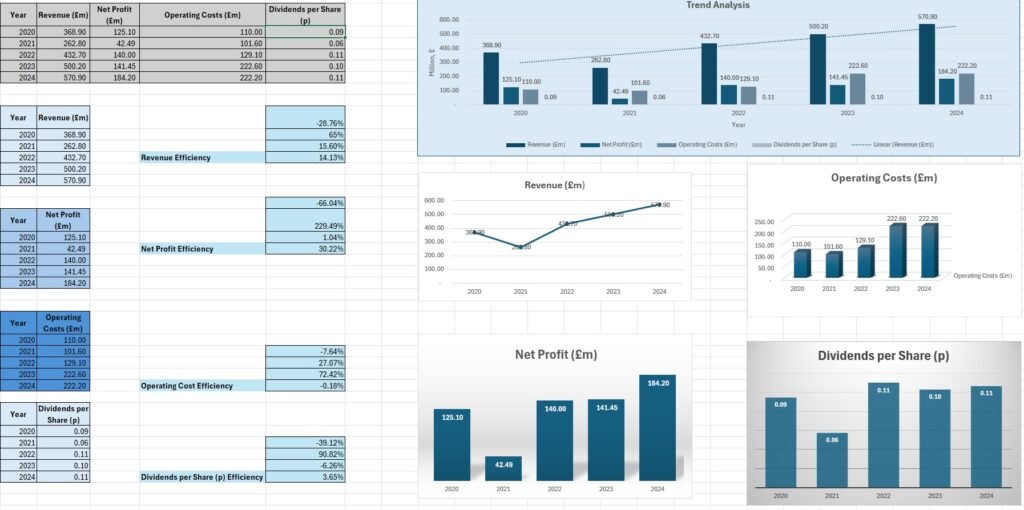
Five-year trend analysis of revenue, net profit, operating costs, and dividends to evaluate financial stability and growth trajectory.
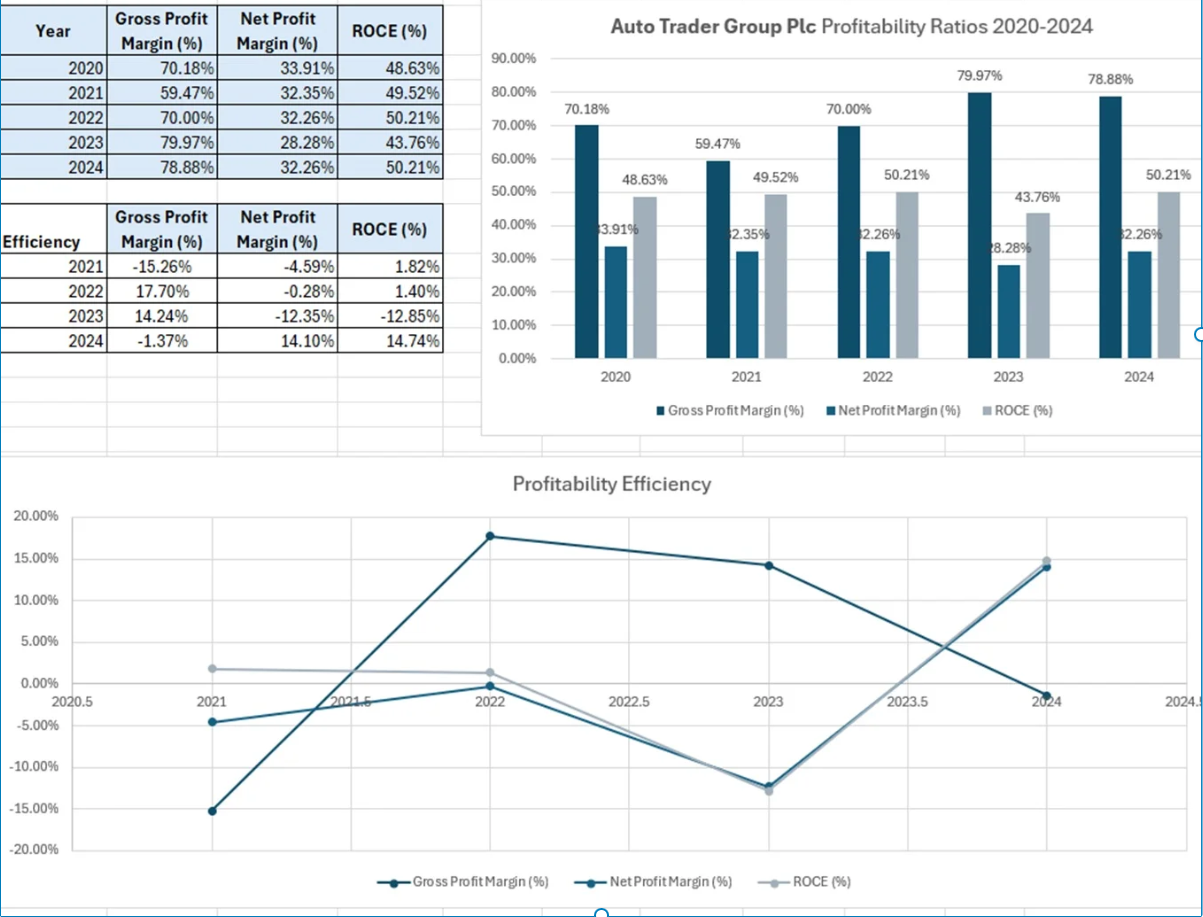
Profitability, margin and ROCE trends across 2020–2024, highlighting changes in operating performance and capital efficiency.
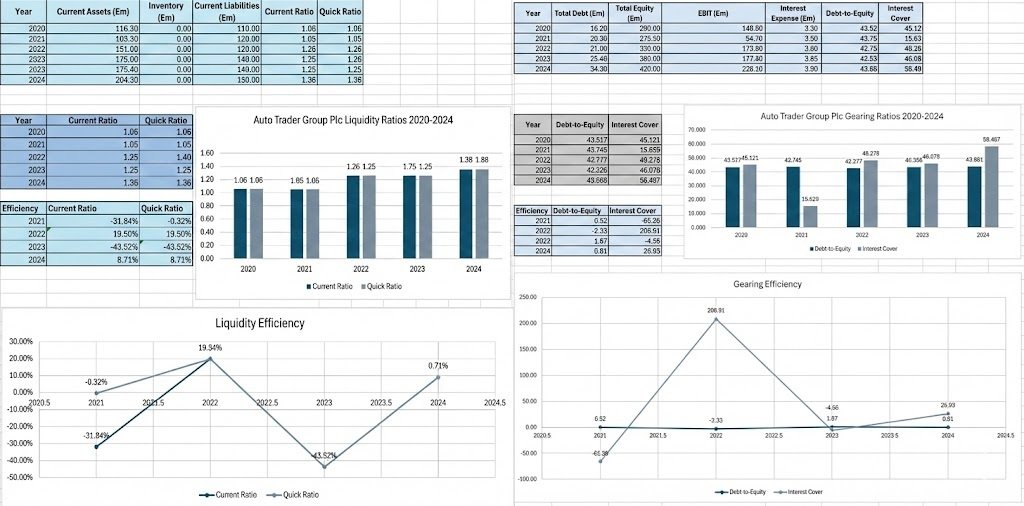
Liquidity strength and solvency risk are measured through current ratio, quick ratio, and debt-to-equity trends.
Key Insights
- Revenue and net profit recovered strongly after the 2021 decline, indicating improved financial momentum.
- Gross-profit margins strengthened, although net-profit performance remained less consistent.
- ROCE stayed comparatively strong, suggesting effective use of employed capital.
- Current and quick ratios improved across the review period, reducing short-term liquidity pressure.
- Debt levels remained manageable, while stronger interest cover reduced immediate solvency risk.
Transferable Business Relevance
This analytical framework can be applied to organisations that need to compare financial performance across years, business units or peer groups. It is particularly relevant where management teams require clearer visibility of profitability, liquidity, debt exposure, capital efficiency and working-capital pressure.
Although this case study uses publicly available company information, the same approach can support distributors, manufacturers, e-commerce businesses and other inventory-intensive organisations by converting financial and operational data into decision-focused dashboards and management commentary.
Where This Analysis Can Be Applied
- Year-on-year financial performance reviews
- Business-unit and peer benchmarking
- Profitability and working-capital monitoring
- Liquidity, debt and solvency-risk reporting
- Executive dashboards and management commentary
Deliverables
- Structured five-year financial model in Excel
- Profitability, liquidity, gearing and efficiency ratio analysis
- Executive dashboards and trend visualisations
- Written interpretation of financial risks and performance movements
- Decision-focused management summary and recommendations
Why This Project Matters
This case study demonstrates how financial statements, ratio analysis and trend visualisation can reveal performance risks that may be missed when figures are reviewed separately. It provides management with a clearer view of profitability, liquidity, debt exposure and capital efficiency.
For inventory-intensive organisations, these insights can support better working-capital decisions, identify financial pressure earlier and improve the quality of executive reporting and operational planning.
Case Study 2: Automotive Inventory Resilience & Disruption Modelling
Independent analytical case study based on publicly available industry and trade data. It demonstrates transferable inventory-resilience and disruption-modelling methods and does not represent commissioned work for the manufacturers analysed.
Business Challenge
Automotive manufacturers and component suppliers rely on tightly coordinated inventory, transport and production networks. When maritime routes, supplier lead times or material availability become unstable, lean inventory policies can increase the risk of shortages, production disruption and higher logistics costs.
This case study examines how automotive organisations adjusted inventory buffers, transport routes and resilience strategies between 2019 and 2024. The analysis compares different operating models to identify how businesses can improve supply continuity without creating uncontrolled stock growth or excessive working-capital exposure.
Questions Addressed
- How did disruption affect inventory coverage and transport lead times?
- When should organisations increase safety stock rather than preserve lean inventory levels?
- How can route diversification reduce dependence on a single shipping corridor?
- How did resilience strategies differ between premium and mass-market manufacturers?
- What role can data visibility and digital capability play in disruption response?
Selected Visual Evidence
Inventory Buffer Expansion
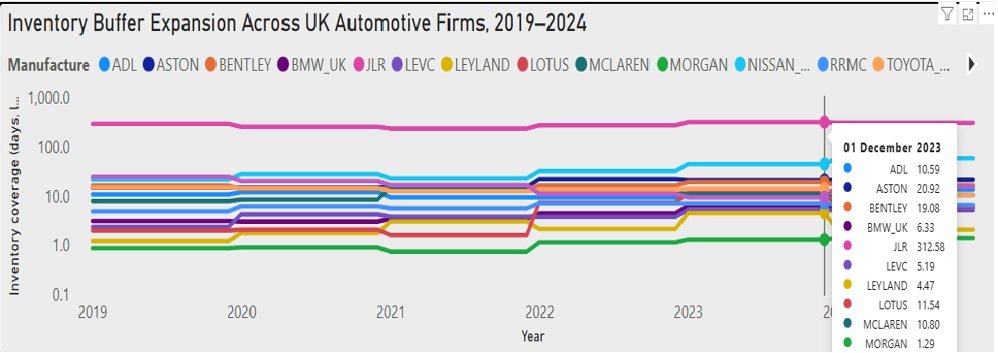
Inventory coverage increased across several automotive firms during periods of disruption, indicating a move away from extremely lean stock policies. The variation between manufacturers also shows that buffer requirements depend on product value, supplier exposure and operating model rather than one standard industry target.
Route Diversification During Disruption
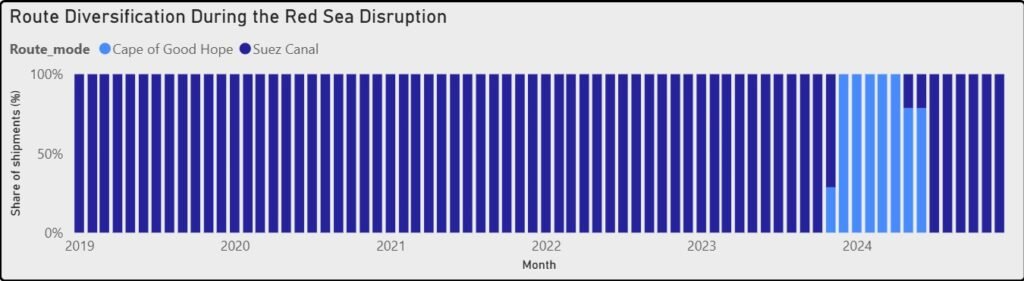
The analysis shows a rapid shift away from reliance on the Suez Canal during the Red Sea disruption, with part of the shipping volume redirected around the Cape of Good Hope. This illustrates how route diversification can protect supply continuity when a primary trade corridor becomes unreliable, although the alternative route may increase transit time and transport cost.
Transit-Time Impact of Route Diversification
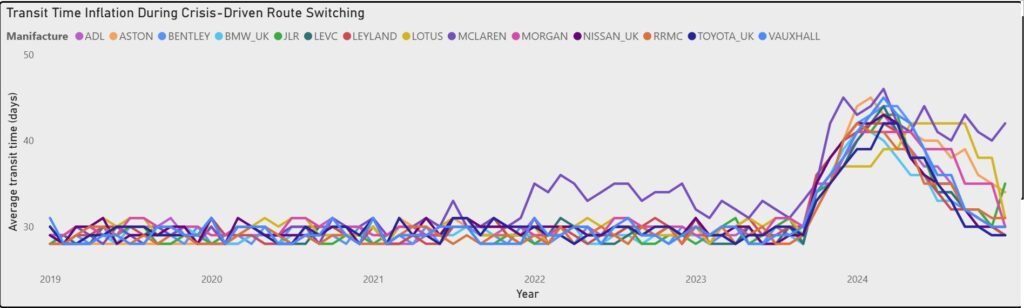
Average transit times remained broadly stable at approximately 28–31 days before the disruption. Route changes during late 2023 and 2024 increased lead times to around 40–46 days for several manufacturers, showing the operational cost of protecting supply continuity through longer alternative shipping routes.
Inventory Buffer Change During Disruption
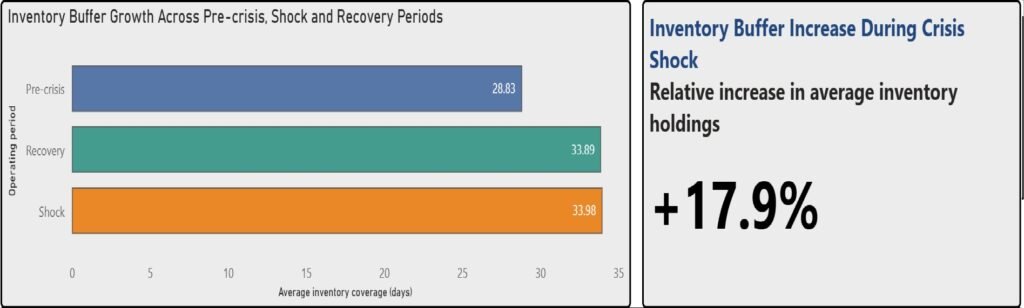
Average inventory coverage increased from approximately 28.8 days before the disruption to around 34 days during the shock period. Coverage remained close to this level during recovery, suggesting that several firms made lasting changes to safety-stock policies rather than applying only a temporary emergency response.
Import-Cost Exposure to Global Supply Pressure
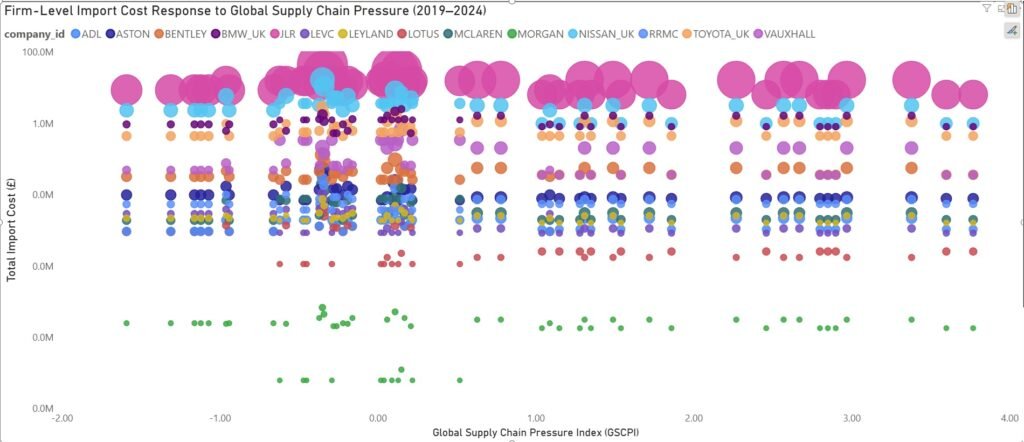
Import-cost outcomes varied considerably between manufacturers exposed to similar levels of global supply-chain pressure. This suggests that external disruption alone does not determine financial impact; sourcing structure, shipment volumes, product value and supplier configuration also influence how strongly cost increases affect each organisation.
Key Findings
- Increasing inventory alone does not guarantee supply-chain resilience. Safety-stock levels should reflect product value, supplier exposure, lead-time risk and service requirements.
- Premium and mass-market manufacturers require different inventory and disruption-response strategies.
- Route diversification can protect supply continuity, although it may increase transport cost and lead time.
- Digital visibility is most valuable when connected to clear inventory, supplier and routing decisions.
Deliverables and Practical Applications
- Inventory-buffer and safety-stock scenario analysis
- Route-diversification and transit-time impact reporting
- Supplier and multi-tier risk-exposure assessment
- Executive dashboards for disruption monitoring
- Decision-focused recommendations for inventory and supply-continuity planning
Why This Project Matters
This case study demonstrates how inventory, transport and supplier data can be combined to assess disruption risk and support more resilient supply-chain decisions. It shows that resilience depends on balancing stock availability, working-capital exposure, lead times and alternative routing options.
For manufacturers, distributors and logistics operations, this approach can support earlier risk identification, more appropriate safety-stock policies and clearer management decisions during supplier shortages, transport delays and wider market disruption.
Case Study 3: FMCG Transaction & Product-Affinity Analysis
Independent analytical case study based on structured retail transaction data. It demonstrates transferable product-affinity, basket-analysis and commercial-reporting methods and does not represent commissioned work for a named retailer or FMCG organisation.
Business Challenge
FMCG and retail businesses process large volumes of transaction data, but individual sales records provide limited value unless they are connected to product combinations, basket behaviour and customer purchasing patterns. Without this analysis, cross-selling, promotional planning and inventory decisions may rely on assumptions rather than evidence.
This case study examines how transaction-level data can be converted into product-affinity measures, basket segments and commercially useful recommendations. The analysis is designed to identify frequently purchased combinations, stronger cross-sell opportunities and patterns that may support better merchandising, promotional and stock-planning decisions.
Questions Addressed
- Which products are most frequently purchased together?
- Which product combinations have the strongest cross-sell potential?
- How does basket size affect revenue and purchasing behaviour?
- Which product bundles could increase average order value?
- How can product-affinity insights support merchandising, promotions and inventory planning?
Analytical Approach
- Prepare transaction-level data and create basket-level records using SQL.
- Identify products purchased within the same customer transaction.
- Calculate support, confidence and lift for product combinations.
- Segment orders by basket size, product mix and commercial value.
- Visualise purchasing patterns and commercial opportunities in Power BI.
- Translate the findings into cross-selling, merchandising and inventory recommendations.
Deliverables
- Product-association and affinity-rules table
- Basket-size and transaction-value analysis
- Cross-sell probability and lift visualisations
- Sales and regional performance dashboard views
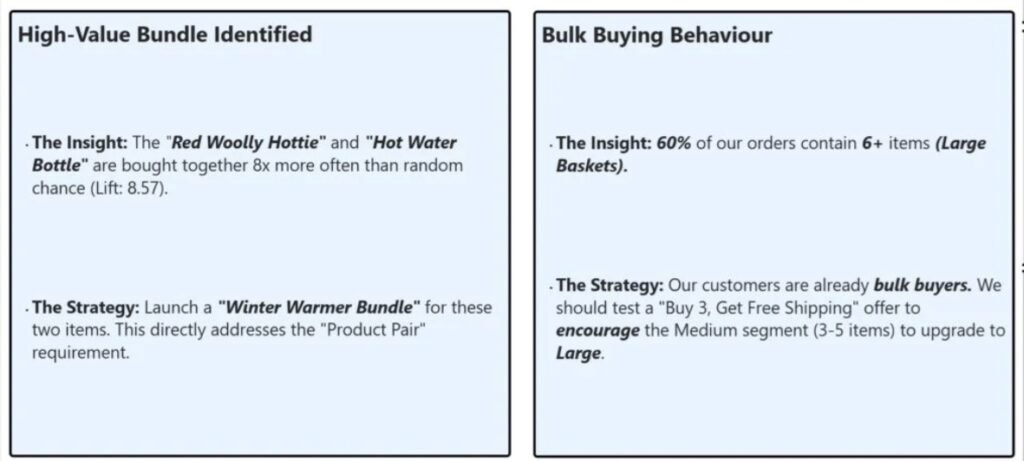
- Product-bundle recommendation matrix
Commercial Applications
The findings can be translated into practical actions across merchandising, promotions, cross-selling and inventory planning.
- Create targeted bundles from product combinations with strong affinity and lift
- Use basket-size patterns to design relevant spending thresholds and incentives
- Add “Frequently Bought Together” recommendations to digital product pages
- Target follow-up offers using cross-purchase probability
- Focus promotional spending on combinations with stronger commercial potential
Selected Visual Evidence
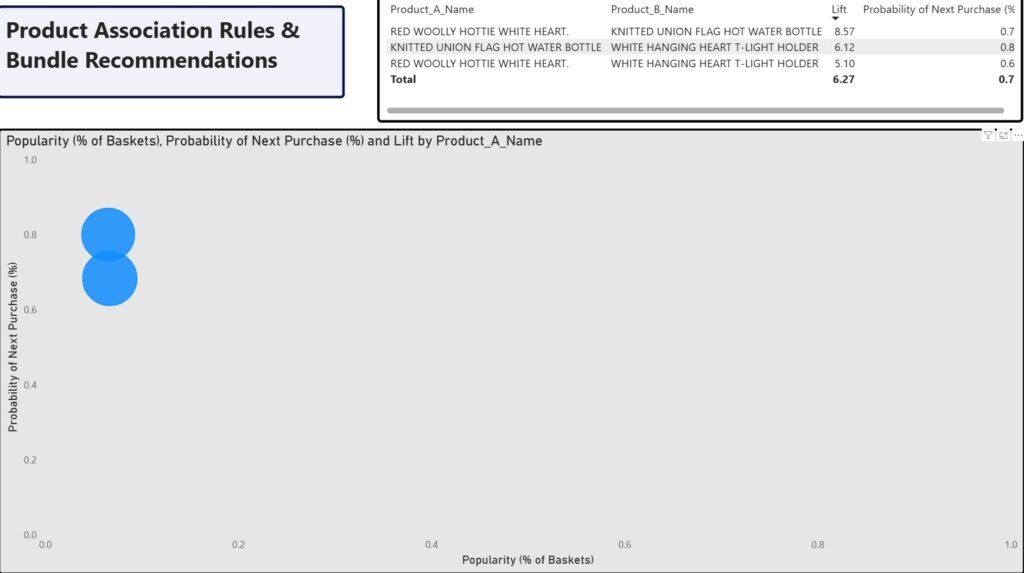
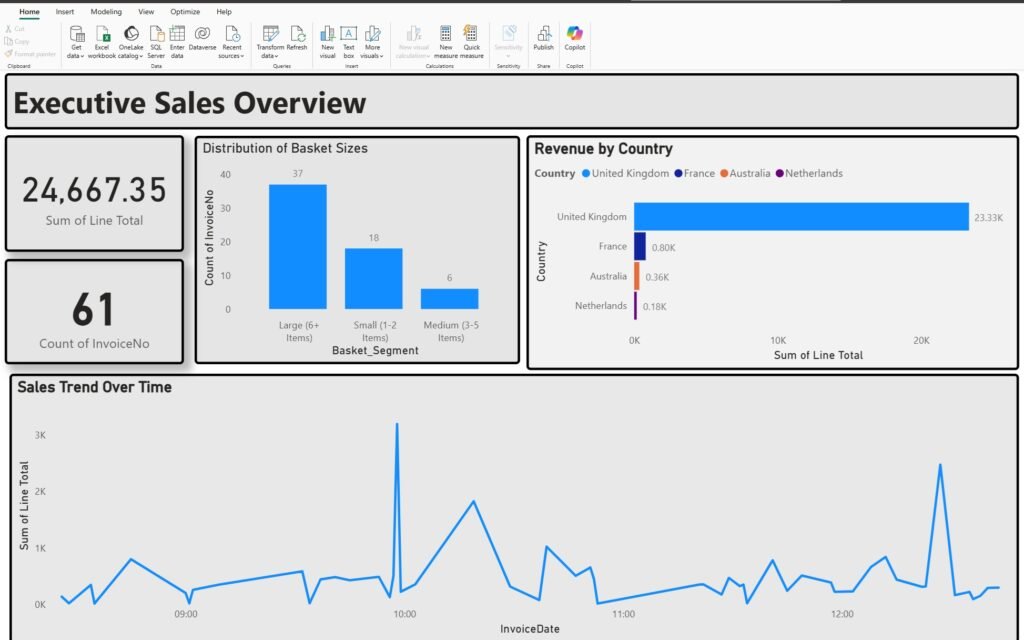
Strategic Logistics & Commercial Interventions: Australian Retail Sector
Selected dashboard views showing product-affinity measures, basket-size distribution, regional revenue and transaction trends.